
Index
1. From support to partnership: What is AI doing in the events industry?
AI helps in data analysis and prediction.
Previously, decisions such as choosing a venue, determining the timing, or categorizing guests often took a lot of time. Now, AI applications in event organization simplify this process by analyzing event data, user behavior, and social media trends to provide accurate recommendations more quickly and conveniently.
For example, a platform like Bizzabo Integrating AI to analyze participant profiles, suggest personalized content, and increase engagement and satisfaction after the event.
Smart event planning
AI-powered assistants like ChatGPT or Notion AI can now help create timelines and suggest checklists suitable for various types of events – from professional seminars to experiential events. Thanks to their ability to synthesize and automate information, event organizers can save hours of time spent "rewriting from scratch.".
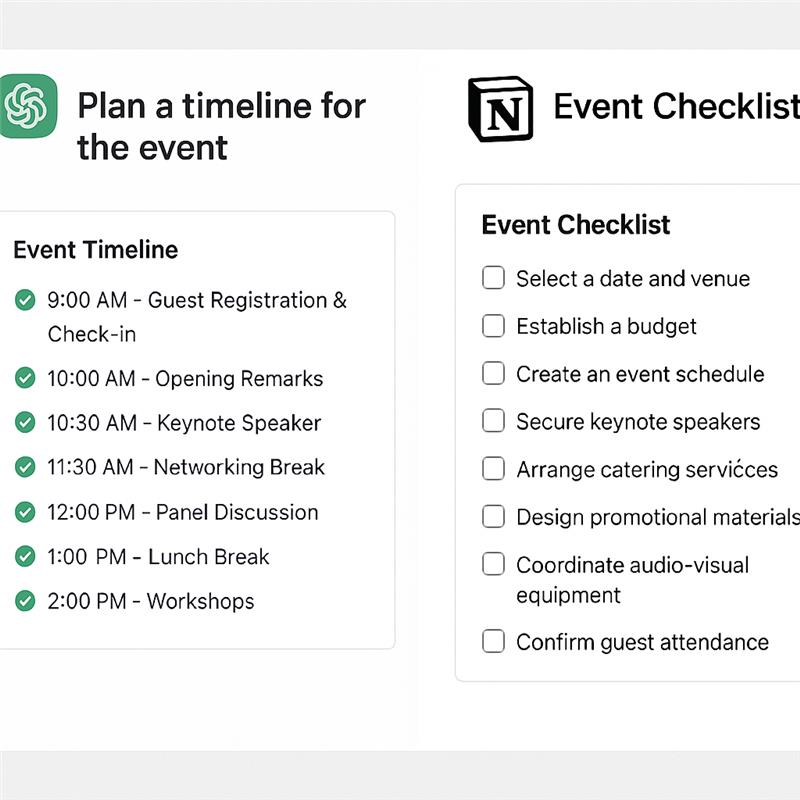
Illustrative image
On-site interaction – Chatbot & facial recognition
At large events, AI chatbots can handle answering frequently asked questions from attendees, guiding them through schedules, and even suggesting workshops tailored to users' interests. Facial recognition technology has been widely applied in many fields, enabling quick and efficient check-in and increasing personalization by displaying attendees' names and relevant event schedules.
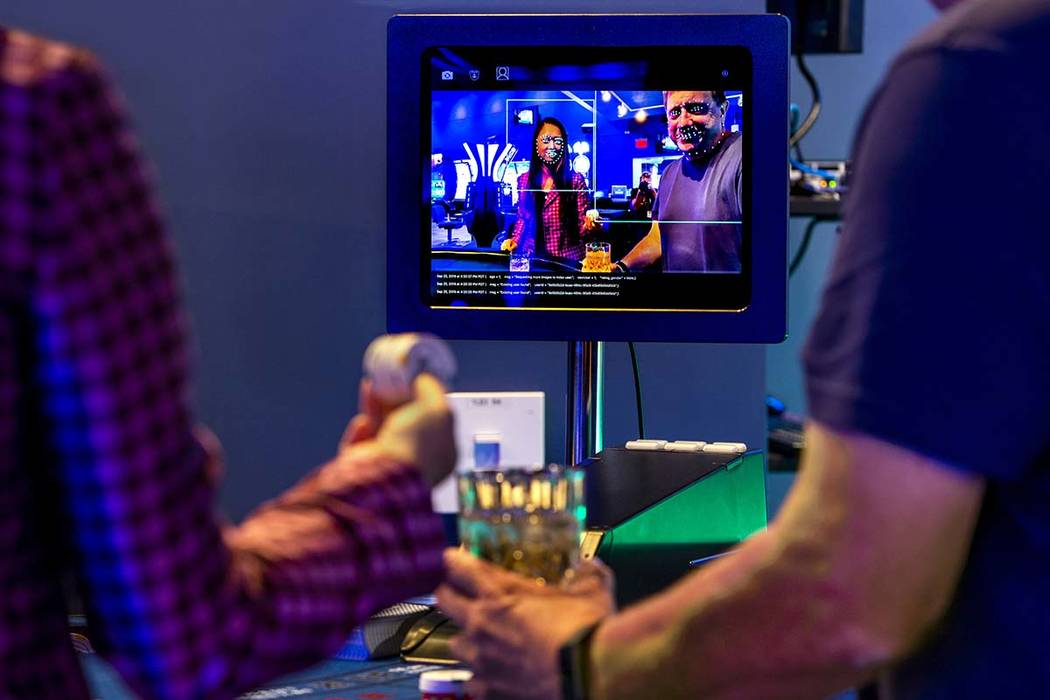
AI-integrated facial recognition technology is an optimal solution for events (Illustrative image)
You might be interested in: 18 check-in apps to help manage events effectively.
2. "Behind-the-scenes" applications of AI in events.
Content & media optimization
AI can help edit speeches, suggest compelling subject lines for invitation emails, or propose MC scripts based on the event's theme. Tools like Jasper AI and Copy.ai are being used by agencies to save time producing media content before, during, and after events.
Create photos and videos using AI.
In the age of "virtual life," having eye-catching images is essential. Several events are now experimenting with creating them. visual backdrop Using AI – for example, MidJourney or DALL·E – to create images in a style unique to each brand. Additionally, recap videos can be automatically edited from footage using AI tools like Runway.
3. Can AI replace human event organizers?
Despite the breakthroughs in AI, there remains a significant gap between "intelligent assistants" and true event planners. This is because:
Emotions and empathy:
AI can read behavioral data, but it can't yet sense emotions. A successful event isn't just about smooth logistics; it's about creating connections between people. This requires subtlety, high EQ, and intuition – qualities only humans possess. Listening, understanding psychology, grasping brand values and customer stories, and inspiring through every detail of the event are things that cannot be programmed.
Handling unexpected situations at an event:
A sudden downpour, a speaker canceling at the last minute – these challenging situations demand quick reflexes, creative solutions, and split-second decision-making. And that's something AI – at least for now – can't do.
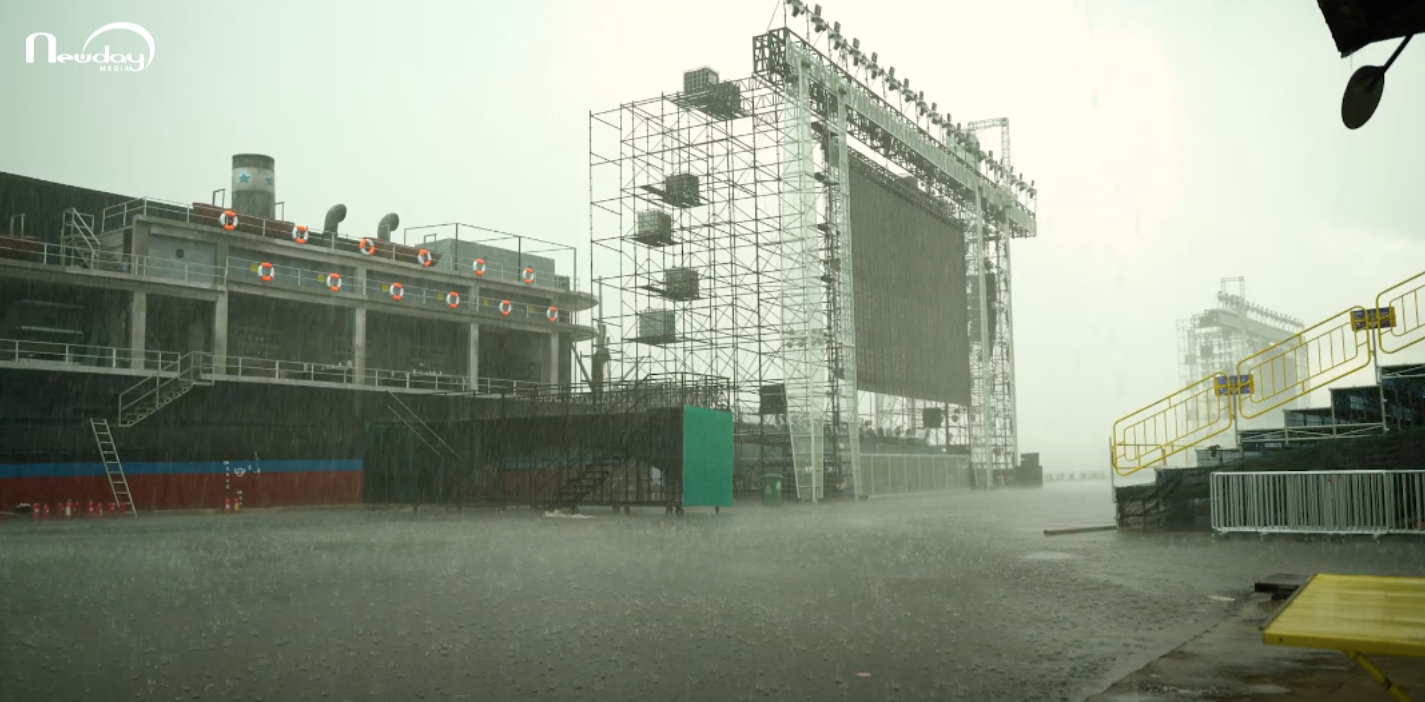
Unexpected situations still require quick and timely responses from people.
AI needs people who know how to use it:
Despite its incredible data processing capabilities and impressive automation, AI is ultimately just a tool. Only humans can tell a story in a moving way, breathe life into every detail, and inspire through each moment of an event – something no algorithm can replace.
A good event planner in the future will not only need to be professionally competent, but also need to have a technological mindset. Knowing how to leverage AI as a powerful assistant to support various tasks.
4. Applying AI correctly in event organization:
Instead of worrying about whether "AI can replace us?", event organizers should ask themselves: “"How can we get AI to work with us more effectively?"”
Here are some practical suggestions:
- Using AI to Automate repetitive tasksCompile feedback, create post-production reports, and send follow-up emails.
- Leveraging AI for Personalizing the participant experience. – from content and gifts to suggested itineraries.
- Applying AI to brainstormingCreate moodboards, suggest themes, and quickly develop scripts.
- Learn how Ask the right questions. for AI – this skill will become a powerful weapon for event planners in the future.
5. In conclusion: AI does not replace but helps make event organization more efficient.
“"When AI becomes event planner" is not a far-fetched vision, but is gradually becoming a reality in every small link of the event organizing chain. However, AI is not here to replace human professionals – but to free them from repetitive tasks, so they can dedicate more time to creativity, connection, and emotion.
Planning a memorable event and need an experienced partner to guide you from concept to execution? At Newday Media, we don't just organize events – we tell brand stories through experience. Contact us today to create an event that truly reflects your brand identity and value!




Your comment